Wednesday, November 20, 2013

What is a PTC site?

What is a PTC site?
P
aid to Click Sites or simply "PTCs" provides an easy way to earn money online while sitting in front of your computer. Infact PTCs are the easiest way to Earn Money Online or Make Money Online (MMO) as we say, without any skills required and No Investment as all PTCs are free to join. Basically, PTCs act as an intermediary between advertisers and consumers --the advertiser pays for displaying Ads on the PTC website and a good part of this cash generated goes to the consumer when he views the advertisements. This is how PTC sites work. Unlike Affiliate Marketing, setting up an account in PTCs is easy and free and that they pay commissions even if visitors never make any purchases. Payment form these sites is just a cakewalk, they directly transfer your earnings to Alertpay or Paypal  - the two safe and secure Online Payment Processors which are both free to join and need only a valid email address to register. You can then can use that money for all your online transactions through them and even can withdraw to your bank account.
How to Earn Money in PTCs?


Earning money in PTCs is very simple. When you sign up to these PTC programs, you get paid to click on ads and visit websites. The process is easy; usually they will provide 4-10 ads per day for you to visit. You simply click on a link and view a website for 20-30 seconds to earn money. Regular price for one visited website is 0.005-.01 cent. Not only this you also make money from your referral clicks. Referrals are those to whom you directly refer or who signs up using your referral link which each PTC gives you. So depending on the number of referrals you can make a lot of money through PTCs even 300-500$ per month easily by just spending few minutes daily. So there is NO real Limit of the income you can make with PTCs. It depends on how consistent you are in opening the sites daily & clicking all ads. It depends on how you do the marketing of this new business and how many active members join under you.
Are All PTCs Legitimate?


Absolutely No and this is the reason behind creating this site. There are 100s of PTCs around internet but only a few of them are legitimate. I must admit that at the beginning of my career here I was scammed by more than 50 PTCs but now after a spending a long time with here I know a lot about them and so sharing all my knowledge about them with you so that you don't have to go with the same stage as me. I will not say that this is the only blog which will protect from PTCs but I will definitely say that to be informed about PTCs you must follow a PTC News site or blog otherwise you will end up with a lot of scams. And if you are not tracking a PTC blog until now then you have one now to follow. I will assure you that you will always be updated with the latest news about PTCs including the latest scam PTCs and the newest PTCs coming.

Tuesday, November 19, 2013

Typhoon Strikes with Nature's Hammer


Typhoon Strikes with Nature's Hammer

The most powerful storm on record pulverizes the Philippines, killing thousands. Now survivors struggle to pick up the pieces


David Guttenfelder / AP
A survivor rests with her remaining possessions near Tacloban, the city hardest hit by Haiyan.
Days had passed since Girlyn Antillon had heard any word from her parents, her six siblings or any other family members, all stranded in the Philippine city of Tacloban — ground zero for the devastation wreaked by Supertyphoon Haiyan. Finally, on Nov. 12, four days after Haiyan made landfall, Antillon caught a ferry from Cebu to the port of Baybay on the island of Leyte. From there she and a colleague hitched a three-hour ride to Tacloban. The roads were strewn with downed power lines and tin roofs that had been scattered by the force of the storm. And there were hungry children, their hands outstretched, carrying homemade signs that read only help. Closer to the city, the haphazard piles of debris grew, and the first corpses were visible.
Unlike most other tropical storms, which weaken before they hit land, Haiyan struck the central Philippines at near peak strength, with sustained winds estimated at 195 m.p.h. and gusts of up to 230 m.p.h. If confirmed, that would make Haiyan the most powerful tropical storm ever recorded to make landfall.
Haiyan's strength and the wall of seawater it brought ashore overwhelmed the Philippine government's disaster preparations. Officials put the death toll at around 2,500 — a figure many aid workers believe is too low — while some 670,000 Filipinos have been displaced. Slowly, too slowly, aid has begun to reach the worst-hit areas. But getting help to people is proving extraordinarily difficult.

Read more: Typhoon Strikes with Nature's Hammer - TIME http://content.time.com/time/magazine/article/0,9171,2157471,00.html#ixzz2lAYJcGAb

Shopping malls of Bangadesh

In Dhaka

Outer view of Bashundhara City, Dhaka.
Aarong outlet at Asad Gate,Lalmatia, Dhaka.

Chandpur District

  • Chandpur Tower
  • Foysal Shopping Complex
  • Hakim Plaza
  • Mir Shopping Complex
  • Chandpur Twin Tower
  • Hannan Plaza
  • Chander Hat(Proposed the largest shopping mall of Bangladesh & 2nd largest of world)
  • Hajir Hat(Proposed The 2nd largest shopping mall of Bangladesh & the 3rd largest of the world)

In Chittagong

In Sylhet

  • Al-Hamra Shopping City, Sylhet
  • Blue Water Shopping City, Sylhet
  • Gallariya Shopping Centre, Sylhet
  • Garden Tower Shopping Mall, Sylhet
  • Karima Mansion East Dargah Gate, Sylhet
  • Karim Ullah Market
  • Latif Center
  • Marvelous Tower Golapganj Sylhet.
  • Manru Shopping City, Chowhatta Sylhet
  • One city (One of the largest in South Asia), Sylhet
  • Pacific Tower shopping mall, Sylhet
  • Sylhet Plaza
  • Shukria Market, Zindabazar Sylhet
  • Sylhet Millenium Mall
  • Sylhet City Centre
  • Sunrise Tower,Sylhet
  • Shobuj Biponi
  • Moni Sopping center, Zindabazar Sylhet
  • Mitali Mension

In Greater Rajshahi

  • Ramiz Market, Bonpara Bazar, Natore
  • Index Plaza, Rajshahi
  • Nanking shopping mall
  • Shal bagan Bazar
  • Saheb Bazar
  • New Market
  • R.D.A Market
  • Laxmipur Bazar
  • Railway Shopping Plaza
  • Nowhata Bazar
  • Baya Bazar
  • Ananda Bazar Super Shop, Uposhahar, Rajshahi
  • Ananda Bazar Super Shop, Bhodra, Rajshahi

In Jessore

  • Jess Tower
  • City Plaza,Jessore

Reference

Monday, November 18, 2013

List of online Market in Bangladesh

15 ways of starting of a Presentation


 15 ways of starting of a Presentation

 Here I have given 15 ways of presentation:

1. Cover Page

The cover page should have your logo, business name and a tagline. Your tagline should give insight into your company and be easy to remember, for example, “We are the Groupon for X." Remember to include your contact information — you would be surprised how many people forget it. Especially if your deck was forwarded, it should be easy for a person to track you down.

2. Summary

Summarize all of the information before you present it, and use this opportunity to get your audience interested in your company. Talk up the most interesting facts about your business, as well as any huge milestones you may have hit.

3. Team

Investors are not only putting money toward your idea, they’re investing in your team. It’s important they know the people who are going to make the concept successful. Make sure to include your background too, and how it relates to your new company. Highlight any of your team's successful exits. Investors like to see that you can take a company to acquisition.
If applicable, emphasize that your team has worked together in the past or for a long period of time. It shows you can and like to work together. If you have any important advisors, list them, but make sure they know you’re using their name.

4. Problem

You need to be able to explain the problem your concept is going to solve. Further, you need to prove why investors should care about solving it with your product or service.

5. Solution

This is the value proposition you are bringing to the table. It should solve the problem you just mentioned. If you have a demo of your product, this is the time to show it. Include any case studies to show that your product has worked for existing customers.

6. Marketing/Sales

You'll want to show the market size for your product. This can include profiles of target customers, but be prepared to answer questions about the cost of acquiring these customers. Not knowing this information is a red flag to investors. If you already have sales, you can discuss your growth and forecast future revenue.

7. Projections or Milestones

It is difficult to create financial projections for a startup. If you don’t have a long financial history, your forecast is really just an educated guess. Instead, you should present the milestones that you've already reached. For instance, include that you acquired 1,000 customers by X date, that you have a partnership with company Y, that you signed a major customer or that you will be cash flow positive by Q3.

8. Competition

Every business has competition even if you think you're offering something new and unique. List your competition and why your product/service is different from their model. If your competitors have been acquired, list acquisition prices and who acquired them.

9. Business Model

Every investor wants to get his money back, so it's important to tell them how you plan on generating revenue. Show a list of the various revenue streams for your model and the timeline for each of them. How will you price your product and what does your competition charge? You should also discuss the lifetime value of your customer and how you will keep him engaged.

10. Financing

If you have already raised money, you will want to talk about how much, who invested and what you did with it. If you have not raised money yet, talk about what you have accomplished with minimal funding. If you have personally funded your startup, make it known. Investors like to see entrepreneurs who have invested their own money. If you’re pitching to raise capital, list how much you're looking to raise and how you intend to use the funds.
11. Use Silence
Most people won’t be able to pull this off very easily, but if you are feeling like a rockstar during your next presentation, opt for silence. Say a few words then be quiet. Say a few more words then be quiet. It’s a quick and easy way to own the room. Just make sure you can hold your composure.
12. Point to the Future or Past
I have two simple statements for you:
-Prospective (looking to the future): “30 Years from now, your job won’t exist.”
-Retrospective (looking to the past): “In 1970, Japan owned 9% of the market. Today, they own 37%.”
The reality is that looking into the future or past always sparks engagement since that’s where our hearts live.
13. Quote Someone
The easiest way to open a talk is simply to quote someone. Think about that last presenter you heard when they opened their talk with a quote from Albert Einstein or Napoleon. A quote equals instant credibility.
14. Share Something Extraordinary
I don’t know about you, but I love Snapple. Even more so, I love their bottle caps since they always share fun facts or extraordinary insight into ordinary things. Is my life going to be improved because I know how many times a bee’s wings flaps in a second? No. Is it crazy interesting? Yes.
15. Tell a Story
Here’s the amazing thing about stories: If your presentation is based solely on facts and stats then your audience is going to react in one of two ways: 1) agree or 2) disagree. However, if you tell a story, your audience will participate with you. Still not sold? Stories have been known to increase audience retention by up to 26%.
So, what are you waiting for? Experiment. Try something new. Step outside your comfort zone. You’ll see some amazing results by trying any one of these techniques.

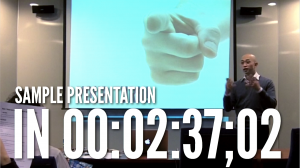
Sample Presentation: How to start and end a presentation in 2 minutes 37 seconds

Sample Presentation: How to start and end a presentation in 2 minutes 37 seconds [VIDEO]

by Carl Kwan on September 11, 2012
Sample English PresentationWhat is the ideal amount of time to give an effective presentation? If you’ve ever watched a Ted video, you’ll have seen that some of the presentations are very short. In fact, some of them are only about three minutes or less. However, those presentations are highly effective and often very memorable. I’ve never given a presentation at Ted, but I have given a short presentation in the past. So this week, you’re going to see a sample presentation of me giving a real presentation that is only two minutes and 37 seconds long. But to make this more helpful for you, I’m also going to include an analysis of what I said and the key expressions that I used.
Here’s the presentation…
If YouTube is unavailable in your area, click the following link to view or download the video: How to start and end a presentation in 2 minutes & 37 seconds (Length 2:37!^^)
English presentation example: Start a Presentation
Here’s the analysis broken down into the beginning, the middle, and the end
(Dramatic voiceover) “In the beginning…”
I start this presentation with a very direct overview of what the audience can expect. Nothing fancy, just to the point and fast.
“Today we’re going to be talking about how to analyze your presentation script.”
The next thing I tell the audience is the first purpose of my talk. Notice that I am telling them that I will help them to do something. This is something that you must always consider… How your information is going to do something for the audience. And here’s what I said:
“Now the purpose of this is to help you find the absolute core, the core message of your presentation.”
And in the middle…
Starting at the 22 second mark, I tell them exactly what we are going to be doing to achieve the first purpose.
“So what we’re going to do… I’m going to teach you guys to analyze your presentation so that you can find the keywords or key phrases in your presentation.”
After that, I move right into the second purpose.
“And what we are going to do today, too is we’re going to help you to figure out, “Okay, how do I get into the mind of my audience and understand the audience.”
From there, I go into explaining they need to do three things to achieve the two purposes. I just simply say…
“The very first thing you’re going to need…”
“The second thing you need…”
“And the third thing you’re going to need…”
But it’s not the end…
This presentation was about something I wanted people to do. I gave them an overview of what they had to do. To end my presentation, I tell them what they need to be careful of. I say to them…
“The important thing is that during this exercise you have to be very, very strict; otherwise, this entire thing does not work.”
Here’s how it all ends…
Finally, I tell them what the big picture is, what the ultimate achievement for them will be.
“So what this is gonna do is help you to start thinking like the audience member…”
And last but not least, I give them the first thing they must do. In other words, I give them a call-to-action.
“So that’s basically it. We’re going to take the next few steps that I’ve outlined in the handouts there. Okay? And we are going to get going with that.”
In summary
To do something like this, you must first be well prepared, organized, and know your stuff. But you also have to keep in mind the basic structure of a presentation: Beginning, middle, and end. In the sample presentation, the structure I’ve followed is…
  1. The beginning to introduce
  2. The middle to explain the details
  3. The end to give a call-to-action
Question time…
What do you think makes people the most nervous when giving a presentation?
Let me know what you think by writing your answer in the comments section below.
As always, let me know if you have any questions about presentations or this particular topic by leaving a comment below or using the contact page.
Thanks and see you again soon.
Carl

Key Elements of a Presentation

The Key Elements of a Presentation

 http://www.skillsyouneed.com/present/what-is-a-presentation.html

Making a presentation is a way of communicating your thoughts and ideas to an audience and many of our articles on communication are also relevant here, see: What is Communication for more. 

Consider the following key components of a presentation:

Context

When and where will you deliver your presentation?  Will it be in a setting you are familiar with, or somewhere new?  Will it be within a formal work setting, or a less formal, social setting?  Will the presentation be to a small group or a large crowd?  And are you already familiar with the audience?

Presenter

The presenter communicates with the audience and controls the presentation.

Audience

The audience receives the presenter’s message(s).  However, this reception will be filtered through and affected by such things as the listener’s own experience, knowledge and personal sense of values.
See our page: Barriers to Effective Communication to learn why communication can fail.

Message

The message, or messages, are delivered by the presenter to the audience.  The message is delivered not just by the spoken word (verbal communication) but can be augmented by techniques such as voice projection, body language, gestures, eye contact (non-verbal communication), and visual aids.

Reaction

The audience’s reaction and success of the presentation will largely depend upon whether the presenter’s message was effectively communicated.
See our page: Improving Communication for more information.

Method

Presentations are usually delivered direct to an audience.  However, today there may be occasions where they are delivered from a distance over the Internet using video conferencing.

Impediments

Many factors can influence the effectiveness of how your message is communicated to the audience, for example background noise or other distractions, an overly warm or cool room, or the time of day and state of audience alertness can all influence your audience’s level of concentration.  As presenter, you have to be prepared to cope with any such problems and try to keep your audience focussed on your message.

Find more at: http://www.skillsyouneed.com/present/what-is-a-presentation.html#ixzz2l4LI1Ut2

What is a Presentation?

What is a Presentation?

http://www.skillsyouneed.com/present/what-is-a-presentation.html

The formal presentation of information is divided into two broad categories: Presentation Skills and Personal Presentation.  These two aspects are interwoven and can be described as the preparation, presentation and practice of verbal and non-verbal communication.  This article is an overview of how to prepare and structure a presentation, and how to manage notes and/or illustrations at any speaking event.
Many people feel terrified when asked to make their first public talk.  Some of these initial fears can be reduced by good preparation which will also lay the groundwork for making an effective presentation.

A Presentation Is...

A presentation is a means of communication which can be adapted to various speaking situations, such as talking to a group, addressing a meeting or briefing a team.
To be effective, step-by-step preparation and the method and means of presenting the information should be carefully considered.  A presentation concerns getting a message across to the listeners and may often contain a 'persuasive' element, for example a talk about the positive work of your organisation, what you could offer an employer, or why you should receive additional funding for a project.

Top 10 tips for a healthy heart

Top 10 tips for a healthy heart

There are many steps people can take to try to prevent heart disease. You can start by concentrating on key lifestyle areas such as eating, exercise, smoking and drinking, and considering other factors like family history, diabetes and stress. Here are 10 top tips for a healthy hear
 
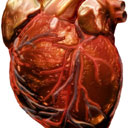
A human heart
1. Stop smoking. Quitting smoking is the single most important thing a person can do to live longer. If you are a smoker, you are twice as likely to have a heart attack than a non-smoker. But from the moment you stop smoking, the risk of heart attack starts to reduce. With public smoking bans recently introduced, there has never been a better time to give up.
2. Cut down on salt. Too much salt can cause high blood pressure, which increases the risk of developing coronary heart disease. Avoid foods like crisps, salted nuts, canned and packet soups and sauces, baked beans and canned vegetables, pork pies, pizzas and ready meals. Many breakfast cereals and breads that appear healthy also contain high levels of salt, so keep your eye on these too.
3. Watch your diet. A healthy diet can help to reduce the risk of developing heart disease, and can also help increase the chances of survival after a heart attack. You should try to have a balanced diet, containing plenty of fresh fruit and vegetables, oily fish, starchy foods such as wholegrain bread, pasta and rice. Avoid foods like biscuits, cakes, pastries and dairy products that are high in saturated fats and sugar.
4. Monitor your alcohol. Too much alcohol can damage the heart muscle, increase blood pressure and also lead to weight gain. Binge drinking will increase your risk of having a heart attack, so you should aim to limit your intake to one to two units a day.
5. Get active.The heart is a muscle and it needs exercise to keep fit so that it can pump blood efficiently round your body with each heart beat. You should aim for 30 minutes of moderate intensity exercise a day. If this seems too daunting, start off gently and build up gradually. Keeping fit not only benefits your physical health - it improves your mental health and wellbeing too.
6. Manage your weight. The number of people who are overweight in Britain is rising fast - already more than half of the adult population is overweight or obese. Carrying a lot of extra weight as fat can greatly affect your health and increases the risk of life-threatening conditions such as coronary heart disease and diabetes. If you are overweight or obese, start by making small, but healthy changes to what you eat, and try to become more active.
7. Get your blood pressure and cholesterol levels checked by your GP. The higher your blood pressure, the shorter your life expectancy. People with high blood pressure run a higher risk of having a stroke or a heart attack. High levels of cholesterol in the blood - produced by the liver from saturated fats - can lead to fatty deposits in your coronary arteries that increase your risk of coronary heart disease, stroke, and diseases that affect the circulation. You can help lower your cholesterol level by exercising and eating high-fibre foods such as porridge, beans, pulses, lentils, nuts, fruits and vegetables.
8. Learn to manage your stress levels. If you find things are getting on top of you, you may fail to eat properly, smoke and drink too much and this may increase your risk of a heart attack.
9. Check your family history . If a close relative is at risk of developing coronary heart disease from smoking, high blood pressure, high cholesterol, lack of physical activity, obesity and diabetes, then you could be at risk too.
10. Make sure you can recognise the early signs of coronary heart disease . Tightness or discomfort in the chest, neck, arm or stomach which comes on when you exert yourself but goes away with rest may be the first sign of angina, which can lead to a heart attack if left untreated.
· Health tips from the British Heart Foundation

Depend upon Allah(swt)

http://www.islamicweb.com/beliefs/creed/abdulwahab/KT1-chap-31.htm
Kitaab At-Tawheed, Chapter: 31
Allah's Words: [And Depend Upon Allah if You Truly Believe]

" Two men from among the God-fearing, upon whom Allah had bestowed His Grace said: "Assault them [the enemy] from the [proper] gate. Once you are in, victory will be yours. And depend upon Allah, if you truly believe" (Qur'an 5:23)
Allah , Most Glorified, Most High, informs us in this verse that two believing men from Bani Israa`eel 1 advised their people and requested that they enter the city of Jerusalem, promising them that they would receive Allah's Help if they did so, because they believed in Allah's Promise which they had heard from the mouth of their Prophet, Moosa (as ), and they asked them to depend upon Allah and trust in2 Him that He would fulfill His Promise and not to be intimidated by the strength of the enemy forces, for victory is in Allah's Hands - He grants it to whom He wills and He withholds it from whom He wills, and He has promised the Believers victory and He never breaks His Promise.
Benefits Derived From This Verse

1. The obligation of mutual advice and encouragement by the members of the army.
2. That faith and trust in Allah are the most important factors in attaining victory.
3. That trust in Allah is a condition of the acceptance of faith.
4. The obligation to trust in Allah and no other.
Relevance of This Verse to the Subject of the Chapter
That the verse proves the obligation of sincere dependence on Allah and trust in Him, Alone.
Relevance of This Verse to the Subject of Tawheed
That the verse proves that depending on Allah and trusting in Him is a form of worship, and directing an act of worship to other than Allah is shirk.
..ooOOoo..
Allah , says:

" For Believers are those who, when Allah is mentioned, feel a tremor in their hearts and when His verses are recited to them, they [the verses] increase their faith and they put their trust in their Rabb, Alone" (Qur'an 8:2)
Allah , Most Glorified, Most High, informs us in this verse that the true Believers are those who, when they fear Allah , fear His punishment, and as a result, obey all of His Commands and abstain from all that He has forbidden; and when verses from the Noble Qur'an are recited to them, their faith and belief are increased and they depend upon Allah and trust in Him, Alone; and they entrust all matters to Him, doing all that is beneficial to them and abandoning that which is harmful to them.
Benefits Derived From This Verse

1. That fear of Allah and trust in Him are characteristics of the Believers.
2. That faith increases and decreases.
3. The obligation to depend upon Allah and trust in Him, Alone.
Relevance of This Verse to the Subject of the Chapter
That the verse proves the obligation to trust in Allah and depend upon Him, Alone.
Relevance of This Verse to the Subject of Tawheed
That it proves that trust and dependence are acts of worship and directing worship to other than Allah is shirk.
..ooOOoo..
Allah , says:

" Oh, Prophet! Sufficient for you is Allah, and for those who follow you among the Believers" (Qur'an 8:64)
In this verse, Allah gives glad tidings to His Prophet, Muhammad (may Peace Be Upon Him) and his believing followers and promises them victory over their enemies and He commands them implicitly to trust in Him, Alone, for He (may Peace Be Upon Him) is sufficient for them against their enemies.
Benefits Derived From This Verse

1. That Allah is Sufficient for those who trust in Him and depend upon Him, Alone.
2. That faith is an essential element in achieving victory.
3. The obligation of faith, by loving Allah, Alone.
Relevance of This Verse to the Subject of the Chapter
That it proves the obligation of faith, by loving Allah , which includes trust in Allah and no other.
Relevance of This Verse to the Subject of Tawheed
That the verse proves that trust and dependence are forms of worship and directing worship to other than Allah is shirk.
Important Note
We have said that love includes trust and dependence because whoever has faith in Allah , Alone, must, of a necessity, depend upon and trust in Him Alone.
..ooOOoo..
Allah , says:

" And whoever places his trust in Allah, Sufficient is He for him, for Allah will surely accomplish His Purpose: For verily, Allah has appointed for all things a due proportion" (Qur'an 65:3)
Allah , Most Glorified, Most High, informs us in this verse that whoever trusted in Him and depended upon Him to fulfill his needs and wants, Allah will suffice him in every matter, whether worldly or religious, for Allah will surely accomplish His Purpose and nothing escapes Him and no request is difficult for Him; and in order that those who ask him be not impatient, He informs us that He has appointed for everything a time and a place, which none can delay nor bring forward.
Benefits Derived From This Verse

1. Evidence of the virtue of trust in Allah and dependence upon Him, Alone.
2. That trust and dependence are among the most important factors in achieving that which is beneficial and avoiding that which is harmful.
3. The obligation to believe in Allah's Ordainment and His Decree.
4. The Completeness and Perfection of Allah's Decree and His Wisdom.
Relevance of This Verse to the Subject of the Chapter
That the verse proves the obligation of dependence upon Allah and trust in Him, for Allah protects His slave and is Sufficient for him, when he depends upon his Rabb.
Relevance of This Verse to the Subject of Tawheed
That the verse proves that trust and dependence are forms of worship and directing worship to other than Allah is an act of shirk.
..ooOOoo..
Allah , says:

" [There were] those to whom people said: "The people are gathering against you, so fear them." But it only increased their faith; they said: "For us Allah is Sufficient and He is the best Disposer of affairs" (Qur'an 3:173)
When Abu Sufyaan and his disbelieving people returned from the Battle of Uhud, they began to gather an army from among them for another attack on the Muslims. On the road, they passed by a group of riders from Bani `Abdul Qais and Abu Sufyaan advised them to inform Prophet Muhammad (may Peace Be Upon Him) and his Companions that Quraish were preparing to assault them with an overwhelming force, but this threat did not discourage them; rather, they were strengthened in their faith and they trusted in Allah , and He was Sufficient for them against their enemies, for He is the One Who is trusted above all others and He never fails the Believers.
Benefits Derived From This Verse

1. That one of the signs of true faith is steadfastness in the face of adversity.
2. That psychological warfare cannot harm the Believers.
3. That faith increases and decreases.
4. The preferability of of the Believer's saying: "Hasbunallaahu wa N'imal wakeel," [i.e. Allah is Sufficient for us and He is the best Disposer of affairs].
5. That taking whatever measures are required in order to achieve one's objectives is not in contradiction with trust in Allah and dependence upon Him, rather it is a requirement for that trust and dependence to be correct.
Relevance of This Verse to the Subject of the Chapter
That the verse proves the obligation to trust in Allah , to depend upon Him, Alone, and to suffice oneself with Him.
Relevance of This Verse to the Subject of Tawheed
That it proves that trust and dependence are forms of worship and directing worship to other than Allah is shirk.
Final Words on this Subject
It is reported on the authority of Ibn `Abbas (ra) that he said:

" Allah is Sufficient for us and He is the best Disposer of affairs" (Qur'an 3:173)
Ibraheem (as ) said it when he was thrown in the fire; and Muhammad (may Peace Be Upon Him) said it when it was said to him:

" The people are gathering against you, so fear them." But it only increased their faith; they said: "For us Allah is Sufficient and He is the best Disposer of affairs" (Qur'an 3:173)
Important Note
Tawakkul means dependence of the heart on Allah , believing Him to be Sufficient against all others for His slaves. Tawakkul (dependence) upon Allah is of three kinds: (i) Depending upon one of Allah's creatures to do something which none is able to do except the Creator: This is major shirk; (ii) depending upon one of Allah's creatures to do something which is within his capabilities but in the belief that he is able to do so independent of Allah's Will: This is minor shirk; depending upon one of Allah's creatures to do something in the knowledge that it will only happen if Allah wills it: This is permissible, such as depending upon someone in business transactions to fulfill his side of the bargain etc.
Tawakkul is half of the Religion and the other half of it is turning in repentance to Allah . And tawakkul does not negate taking precautions; instead, it is a requirement in order for the tawakkul to be accepted and for one's faith to be complete.
Footnotes
1. Bani Israa`eel: The People of Israel.
2. Dependence upon and trust in Allah (swt), known as tawakkul in Arabic.